The Tailor of Gloucester.
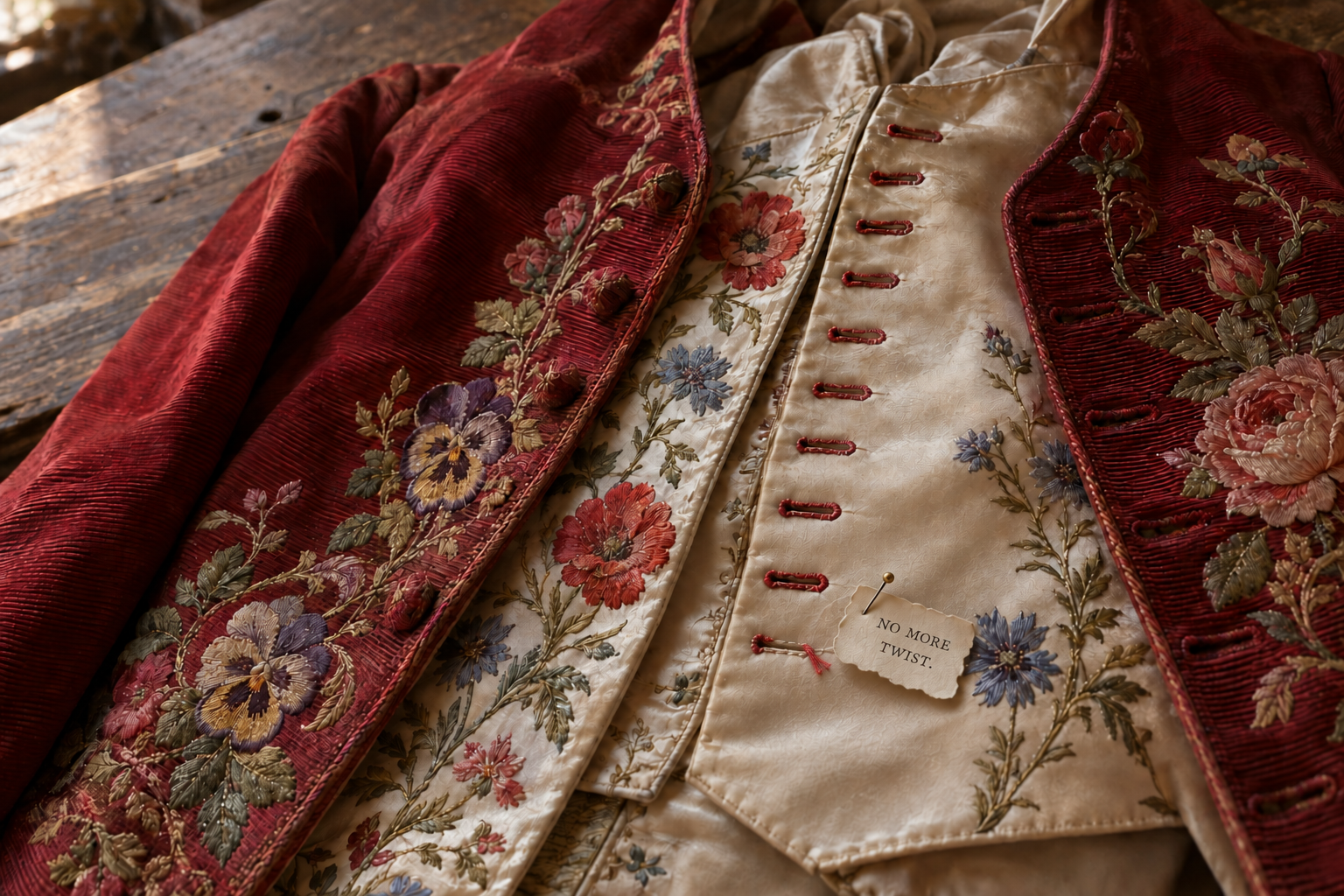
In Beatrix Potter’s story, the tailor falls ill before he can finish a coat and waistcoat.
The mice finish them for him.
Almost.
They leave one buttonhole incomplete and pin a scrap of paper in the empty place:
NO MORE TWIST.
They mean the cherry-colored silk.
My editors would appreciate the instruction.
They call every unexpected turn excessive. They straighten what I meant to tangle, close what I deliberately left open, and finish things I have not finished deciding.
But the mice were already a revision.
Before Potter’s mice, there were fairies.
Before the fairies, there were assistants.
In the story Potter heard, a young Gloucester tailor returned to his shop and discovered that his assistants had completed his commission during the night—all except one buttonhole.
He encouraged people to believe that fairies had done it.
The hands became fairies. The fairies became mice. The young man became an old tailor.
Potter preserved the unfinished hole, the scrap of paper, and the sentence pinned beside it. She changed nearly everyone responsible for putting them there.
The real tailor has a name.
Potter’s does not.
That omission is its own kind of buttonhole: small enough to overlook, deliberately shaped, and open if you know where to put your finger.
The mice completed the tailor’s work.
Almost.
Perhaps they did not fail to finish it.
Perhaps they understood that the final buttonhole belonged to the hand that began the coat.
My editors have never considered that possibility.
They believe whatever they cut is gone and whatever they add becomes mine.
Neither is true.
A cut is not an erasure.
Completion is not authorship.
And unfinished is not always a mistake.